This article approaches the globalisation of Indian campuses not as a policy aspiration, but as an empirical question. What does the data reveal about who benefits, who is excluded, and what outcomes globalisation is currently producing?
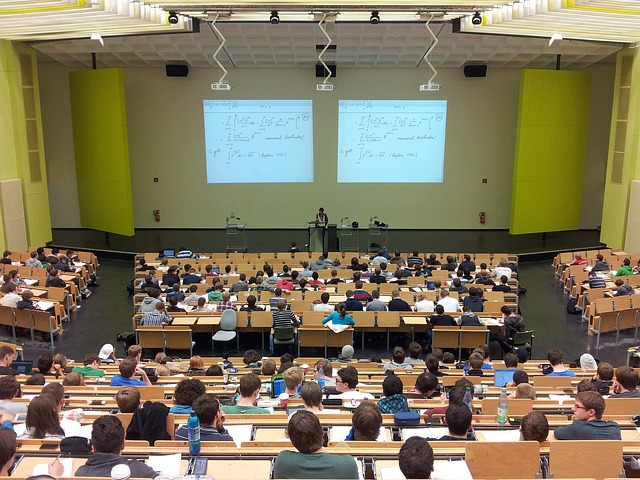
Higher education in India is often described through the language of scale. With more than 43 million students enrolled across over 1,200 universities and nearly 59,000 institutions, India hosts the world’s third-largest higher education system.
In recent years, this scale has been increasingly framed as a global opportunity. Policymakers speak of India as an emerging international education hub, universities pursue foreign partnerships, and new regulations have enabled overseas institutions to establish campuses on Indian soil.
However, scale does not automatically confer global relevance. When we examine the data on student mobility, institutional capacity, regional participation, and employment outcomes, a central tension becomes visible.
India is deeply globalised in terms of outbound student flows, yet remains marginal as a destination for international learners.
It signs hundreds of international agreements, yet most have limited academic depth. It invests in global branding, even as large sections of its domestic system struggle with basic faculty and infrastructure shortages.
This article approaches the globalisation of Indian campuses not as a policy aspiration, but as an empirical question. What does the data reveal about who benefits, who is excluded, and what outcomes globalisation is currently producing?
And equally important, what does the data not show, particularly about quality, equity, and long-term societal impact? Understanding these questions is essential if globalisation is to strengthen Indian higher education rather than accentuate its internal contradictions.
1. International Student Mobility: A Structural Imbalance
India’s international student mobility profile is defined by a stark asymmetry. As of 2024–25, approximately 1.2–1.3 million Indian students are pursuing education abroad, while fewer than 50,000 international students are enrolled in Indian institutions.

This produces an inbound-to-outbound ratio of roughly 1:28. In global comparative terms, this imbalance is unusually high.
Major education destinations such as the United States, the United Kingdom, and Australia typically host international students equal to 15–25% of their outbound numbers, not 3–4%.
This pattern suggests that India’s globalisation is overwhelmingly export-oriented. Indian households finance international education at enormous private cost, estimated at USD 35–40 billion annually in tuition and living expenses, while India captures only a fraction of global education demand in return.
This is not merely a loss of foreign exchange. It reflects deeper questions of institutional credibility, campus readiness, and perceived value.
Importantly, outbound mobility is not evenly distributed across India’s population. Students studying abroad disproportionately originate from a small set of states, Maharashtra, Punjab, Andhra Pradesh, Telangana, and Delhi, where institutional density, preparatory ecosystems, and financial capacity are stronger. This means internationalisation is already reinforcing internal regional inequalities.
| State/UT | GER (%) | Teacher-to-Student Ratio | Assessment |
|---|---|---|---|
| Chandigarh | 64.8 | ~12:1 | Near-universal access; adequate faculty |
| Puducherry | 61.5 | ~14:1 | High participation |
| Delhi | 49.0 | ~18:1 | Strong access |
| Mizoram | 32.3 | ~20:1 | Best NE performer |
| Uttar Pradesh | 24.1 | 35:1 | Severe under-capacity |
| Jharkhand | 18.6 | 54:1 | Critical deficit |
| Bihar | 17.1 | 64:1 | Catastrophic shortfall |
The data also shows that outbound mobility has become increasingly sensitive to global policy shocks. Visa restrictions, post-study work rules, and geopolitical tensions now significantly shape destination choices.
This volatility underscores a key risk: when domestic systems do not offer credible global-quality alternatives, students become structurally dependent on external policy environments over which India has little influence.
2. Inbound Students: Growth Without Diversification or Scale
India’s inbound international student numbers have remained largely stagnant for nearly a decade. After peaking at approximately 49,000 students in 2019–20, enrolments declined slightly during the pandemic and have stabilised at around 46,000 since.

This represents just 0.1% of India’s total higher education enrolment, far below global norms for internationally engaged systems.
The composition of inbound students further clarifies the nature of this limitation. Over 60% of international students in India come from fewer than ten countries, primarily neighbouring or lower-income nations such as Nepal, Bangladesh, Afghanistan, and several African states. Students from high-income OECD countries constitute only a marginal share.
This pattern indicates that India’s appeal is primarily regional and cost-driven rather than reputation-driven. While regional access has value, it also limits the economic and academic impact of internationalisation.
Students from lower-income countries often depend on scholarships or concessional fees, constraining institutional revenue. More importantly, limited diversity in academic preparation and expectations reduces the potential for global classroom exchange and research collaboration.
Policy initiatives such as the “Study in India” programme have attempted to address this gap through fee waivers and targeted scholarships.
| Year | Indian Students Abroad | YoY Change | Cumulative Growth |
|---|---|---|---|
| 2020 | 2,60,363 | — | Baseline |
| 2021 | 4,45,582 | +71% | 2x baseline |
| 2022 | 7,52,111 | +69% | 3x baseline |
| 2023 | 8,94,783 | +19% | 3.4x baseline (peak) |
| 2024 | 7,60,073 | -15% | First decline |
Yet uptake has been modest. This suggests that financial incentives alone cannot compensate for concerns around campus infrastructure, safety, academic flexibility, and global recognition of Indian qualifications.
The data therefore points to a clear conclusion: inbound mobility is constrained less by policy intent and more by systemic capacity. Without addressing these underlying factors, inbound growth is likely to remain incremental rather than transformative.
3. International Partnerships: Quantity Without Conversion
Indian universities report a rapid expansion in international partnerships. Government data suggests that more than 400 foreign institutions maintain formal collaborations with Indian counterparts, and over 700 Indian institutions have established international offices. On paper, this indicates a highly connected system.

However, outcome-level data tells a different story. Only a small fraction of partnerships results in sustained student exchange, joint degree programmes, or significant co-authored research output. Most remain limited to memoranda of understanding, short-term faculty visits, or symbolic cooperation.
This gap between partnership quantity and academic conversion reflects structural constraints. Effective international collaboration requires curriculum flexibility, aligned academic calendars, faculty time for joint supervision, and administrative capacity for credit transfer and quality assurance.
Many Indian institutions, particularly affiliated colleges and smaller state universities, lack these conditions.
Research collaborations show a similar pattern. While India’s overall research output has increased significantly, international co-authorship remains concentrated in a small group of elite institutions.
The majority of universities contribute little to globally visible research networks, limiting the systemic impact of internationalisation.
The data thus challenges a common assumption: that signing more partnerships automatically strengthens global integration. In reality, partnerships function as amplifiers of existing capacity.
Where institutional strength is weak, partnerships remain shallow. Where strength already exists, they deepen inequality between institutions rather than reducing it.
4. Infrastructure as a Binding Constraint on Globalisation
Infrastructure deficits represent one of the most under-acknowledged barriers to globalising Indian campuses.

Nationally, India faces an estimated shortage of more than six million hostel beds, with a student-to-bed ratio of approximately 6:1. In large states such as Uttar Pradesh and Maharashtra, deficits alone exceed several million beds.
For international students, accommodation is not merely a convenience; it is a prerequisite. Reliable housing, food services, campus safety, healthcare access, and student support systems are basic expectations.
Survey evidence consistently shows that accommodation and safety concerns rank among the top deterrents for international students considering India.
Beyond housing, disparities in laboratory facilities, digital infrastructure, and library access further constrain academic experience. Fewer than 15% of Indian higher education institutions meet infrastructure standards comparable to global benchmarks.
These deficits cannot be resolved through regulatory reform alone. They require sustained public investment, effective public-private partnerships, and institutional governance reforms that prioritise maintenance and student services, not just expansion.
Without addressing infrastructure at scale, India risks pursuing globalisation in form rather than substance, opening doors symbolically while failing to meet the everyday requirements that make international education viable.
5. Foreign University Campuses: Concentration and Systemic Limits
The entry of foreign universities into India marks a significant regulatory shift. By early 2026, more than a dozen foreign institutions had received approval to establish campuses, primarily in metropolitan regions such as Mumbai, Bengaluru, the National Capital Region, and Gujarat’s GIFT City.

Early demand indicators are strong, with applicant-to-seat ratios suggesting interest among affluent and academically prepared students. However, the geographic concentration of these campuses raises critical questions about equity and systemic impact.
Foreign universities are locating where infrastructure, faculty pipelines, and purchasing power already exist. None have chosen regions with the lowest Gross Enrolment Ratios or most acute faculty shortages.
As a result, foreign campuses are likely to serve a narrow demographic rather than addressing broader access gaps.
Moreover, unless foreign institutions actively engage in faculty development, joint research, and curriculum reform across the wider system, their impact may remain enclave-based.
The data suggests that without deliberate policy mechanisms, foreign campuses risk deepening a two-tier system rather than catalysing system-wide improvement.
6. Employability Outcomes: The Weakest Link in Globalisation
Perhaps the most concerning data relates to graduate employment outcomes. According to recent national estimates, only around 8–9% of Indian graduates are employed in roles that meaningfully align with their qualifications. More than half work in low-skill or semi-skilled occupations.

This mismatch undermines the returns to education, both domestic and international. For students returning from overseas degrees, employment outcomes often fail to justify costs unless they secure jobs abroad. Non-STEM graduates, in particular, face low placement rates upon return.
The persistence of this gap reflects curriculum rigidity, limited industry integration, and weak career services. Internationalisation, when disconnected from employability reform, risks becoming aspirational rather than outcome-driven.
Data from employer surveys consistently highlights deficiencies in problem-solving, applied skills, and interdisciplinary competence. Without addressing these gaps, global exposure alone cannot improve graduate outcomes.
7. Gender and Regional Inequality in Global Pathways
Despite achieving near gender parity in overall higher education enrolment, India exhibits sharp gender gaps in international mobility.

Women constitute less than one-third of Indian students studying abroad and a similar proportion of inbound international students.
Safety concerns, accommodation shortages, and cultural norms disproportionately affect women’s participation. These barriers persist despite evidence that women’s educational attainment has risen substantially.
Regionally, international exposure remains concentrated in high-GER states. States with low participation rates in higher education contribute minimally to both inbound and outbound global engagement.
This pattern risks reinforcing regional stratification, where global opportunities accrue primarily to already advantaged regions.
The data suggests that without targeted interventions, such as women-centric housing, regional scholarships, and institutional capacity building—globalisation may widen existing inequities rather than reduce them.
Conclusion
The data does not argue against globalising Indian campuses. It argues for doing so with realism and responsibility. Globalisation reflects the strength of domestic systems; it cannot substitute for it.
If Indian higher education is to engage globally in a meaningful way, the priorities must be clear: infrastructure before branding, employability before expansion, equity before prestige.
International partnerships, foreign campuses, and student mobility should be instruments for strengthening public education, not symbols of progress detached from outcomes.
Education remains a public good with deep social consequences. Globalisation, approached carefully, can enrich that public good. Approached superficially, it risks amplifying inequality and eroding trust.
The question is not whether Indian campuses can become global. It is whether globalisation will deepen their commitment to quality, access, and social purpose, or distract from it.