This explains why Gen Z college debt has become a dominant topic across student communities. Students are openly questioning whether taking on significant debt makes sense in a labour market where entry-level salaries remain uncertain.

When I speak to students today, on campuses, in policy discussions, or through the vast and unfiltered conversations unfolding online, I am struck by a quiet but profound shift. The student of 2025 is not rejecting education. They are interrogating it. They are asking questions that earlier generations either did not ask or could not afford to ask.
We are living through what many describe as a poly-crisis: economic uncertainty, rising inequality, climate anxiety, geopolitical instability, and the rapid spread of artificial intelligence. For Generation Z, these are not distant forces. They shape daily choices about study, work, debt, and mental health.
Social listening, across platforms like Reddit, TikTok, YouTube, LinkedIn, and student forums, offers us a rare window into how young people are processing this reality in their own words. What emerges is a generation that is pragmatic yet values-driven, digitally fluent yet deeply skeptical, and ambitious yet cautious.
From concerns about Gen Z college debt and Gen Z mental health college, to debates around skills vs college degree, bootcamps vs university, and Gen Z study abroad 2025, the message is consistent: education must prove its value, not merely promise it.
Let me reflect on what this data tells us, and what it demands of institutions like ours.
1. Gen Z’s New Value Framework: Security, Purpose, and Well-being
Social listening data reveals that Gen Z evaluates education through a three-part lens: financial security, meaningful work, and mental well-being.

Key data points shaping decisions:
- 48% of Gen Z globally report feeling financially insecure
- 60% of financially secure Gen Z report being “happy,” versus just 30% among the insecure
- 89% say purpose is essential to job satisfaction
This explains why Gen Z college debt has become a dominant topic across student communities. Students are openly questioning whether taking on significant debt makes sense in a labour market where entry-level salaries remain uncertain. The idea that education is inherently “worth it” has given way to careful ROI calculations.
At the same time, Gen Z is not motivated by money alone. Social listening consistently shows strong interest in careers linked to social impact, education, healthcare, sustainability, and ethical technology. But the condition is clear: purpose must coexist with stability. Passion without livelihood is viewed as privilege, not aspiration.
Mental health has become a non-negotiable factor in institutional choice. Discussions around Gen Z mental health college dominate Reddit threads and Instagram communities.
Students actively warn peers about campuses perceived as academically toxic or emotionally unsafe. Counseling access, peer support, and workload culture are now considered core infrastructure, not auxiliary services.
In short, Gen Z is redefining success. It is no longer about titles or prestige, but about sustainable lives. Institutions that fail to acknowledge this shift risk appearing disconnected from student realities.
2. Discovery Has Moved: How Students Find Universities in 2025
One of the clearest signals from social listening is that the traditional admissions funnel has fundamentally changed.

How Gen Z discovers universities today:
- 40% now use TikTok or Instagram instead of Google for initial searches
- 85% cross-check information across multiple platforms
- YouTube remains the most trusted source for long-form validation
The student journey no longer begins with a prospectus. It begins with peer content. A short “day in the life” video often carries more weight than an official website. Reddit threads asking “Is this university worth it?” function as informal due diligence forums.
Different platforms play different roles:
- TikTok & Instagram: Discovery, campus culture, relatability
- YouTube: Deep dives, program reviews, lived experience
- Reddit: Risk assessment, scams, unfiltered critique
- LinkedIn: Career outcomes and professional signaling
This shift is particularly pronounced among first-gen college social media users. For first-generation students, social platforms replace missing institutional guidance. Peers become counselors, influencers become navigators, and online communities substitute for inherited social capital.
The implication is important: universities no longer control first impressions. They enter the conversation late, often after opinions are already formed. Social listening is, therefore, not a marketing add-on; it is essential intelligence.
3. Authenticity Over Authority: Why Peer Voices Matter More
Gen Z’s digital fluency has made them highly sensitive to inauthenticity. Polished institutional messaging is often viewed with suspicion.
What social listening consistently shows:
- Student-generated content delivers 3–5x higher engagement
- Micro-influencer campaigns outperform official accounts by 4x ROI
- 61% say social media influences decisions, but only after verification
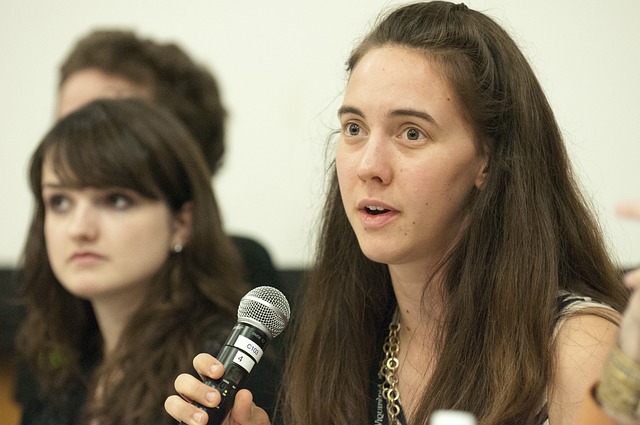
Trust today flows horizontally. Students trust peers who show imperfect realities: crowded hostels, academic pressure, mental health struggles, and small victories. This explains the success of student-led storytelling initiatives globally.
In India, however, social listening also reveals a backlash. The rise of “Tech Bhaiya” and “Didi” influencers initially filled skill gaps, but growing reports of misleading claims and scam courses have eroded trust. Gen Z is becoming more discerning, not less.
Authenticity, therefore, is fragile. It cannot be manufactured. Institutions must learn to listen, amplify real voices, and accept discomfort. Attempts to control or overly curate student narratives are quickly exposed and rejected.
The deeper lesson is this: credibility today is earned through openness, not authority. Universities must adapt to being participants in conversation rather than sole narrators.
4. Skills vs Degrees: The ROI Question No Longer Whispered
Few debates are as prominent online as skills vs a college degree. Social listening reveals a sharp rise in skepticism about traditional degrees as standalone credentials.

Key data points driving this shift:
- 40% of Gen Z cite cost as a reason to skip university
- 99% of Indian employers prioritize GenAI skills over experience
- 85% of Indian employers value professional certifications
Students increasingly view degrees as necessary but insufficient. The dominant strategy is credential stacking, combining formal education with certifications in AI, data, project management, or design.
This has intensified comparisons between bootcamps vs universities. Bootcamps are seen as faster, cheaper, and more aligned with immediate employment. Universities, by contrast, are valued for depth, credibility, and long-term mobility, but only when paired with skills training.
The message is not anti-university. It is conditional. Degrees must demonstrate relevance. Curriculum misalignment with labour market needs is openly criticized on forums like r/Indian_Academia and r/developersIndia.
Institutions that resist this conversation risk irrelevance. Those that integrate skills meaningfully into academic pathways will remain central.
5. Online Degrees and Flexible Learning as Legitimate Choices
Another clear trend from social listening is the normalization of online degrees in India.

Why online education is gaining legitimacy:
- Flexibility for working students
- Lower cost compared to private residential programs
- Improved employer acceptance
Comparative discussions around platforms like Manipal Online and Amity Online show students making nuanced trade-offs between structure, branding, placement outcomes, and administrative efficiency.
At the same time, skepticism remains high due to the proliferation of low-quality providers. Reddit discussions frequently warn against predatory “pay after placement” models and unverifiable claims. Transparency has become the currency of trust.
Online education is no longer a fallback. It is a strategic choice, especially for learners balancing work, study, and family responsibilities.
6. Global Mobility Rewired: Gen Z Study Abroad in 2025
The idea of studying abroad remains aspirational, but Gen Z study abroad 2025 looks very different from previous years.

Key shifts shaping destination choices:
- Rising costs and visa uncertainty in the US, UK, and Canada
- Canada study permits projected to decline by over 50%
- Germany’s total annual cost: ₹8–12 lakh vs US ₹40–70 lakh
Indian students are increasingly drawn to “high ROI” destinations like Germany, France, and Spain, where public education, post-study work rights, and affordability align.
Social listening also reveals a growing anxiety about reputation abroad. Discussions around plagiarism, academic integrity, and cultural isolation reflect concern that the actions of a few may affect many.
The study abroad decision has become a calculated investment, not an emotional leap.
7. Campus Climate: Safety, Mental Health, and Belonging
Campus safety and mental health are no longer peripheral issues.
Dominant themes in social listening:
- Distrust of institutional responses to harassment
- Reliance on peer support over formal counseling
- Backlash against “wellness washing.”
Students openly evaluate universities based on how they handle crises. Silence or defensiveness damages credibility irreparably. For Gen Z neurodivergent college students, accessibility and accommodation are particularly critical, with rising expectations of inclusive pedagogy.
Mental health support is now seen as infrastructure, no different from libraries or laboratories.
8. AI, Learning, and the Future of Pedagogy
AI is now embedded in student learning behavior.

Key indicators:
- 88% of students use AI tools for study support
- Strong demand for AI personalized learning, Gen Z
- Anxiety due to unclear institutional policies
Students want guidance, not prohibition. They expect AI literacy, ethics, usage, and limitations to be part of the curriculum. At the same time, they fear punitive approaches that fail to acknowledge reality.
Institutions that integrate AI thoughtfully will build trust. Those who ignore it will widen the credibility gap.
To Conclude
What social listening reveals in 2025 is not student disillusionment, but student clarity. Gen Z is not abandoning education. They are redefining it as an investment of money, time, and emotional energy.
They demand transparency, flexibility, mental health support, and demonstrable outcomes. They value purpose, but not at the cost of precarity. They trust peers, not slogans. And they expect institutions to listen before they speak.
For universities, this is a moment of choice. We can defend legacy models and hope students adapt. Or we can respond with humility, data, and reform.
Education has always been a public good. But in 2025, it must also be publicly accountable. Listening, deeply and consistently, is no longer optional. It is our responsibility.
If we meet Gen Z where they are, education will not lose its relevance. It will regain its credibility.